Cranial Therapy Success for Non-Sleeping Toddler

My daughter had never been a good sleeper and at age 2.5 she was waking up every few hours throughout the night. Her naps were only to 30-45 minutes max in the afternoon.  Her restlessness at night was accompanied by screaming bouts when she would wake up and when I say screaming  I do not mean an upset cry.  She was inconsolable.  She was screaming a cry you could not ignore and she could not express to us what was going on.  We were unsure if she was having nightmares or was sick or in pain, but it was even more extreme than that.  She would shoot straight up in bed.  When that happened It was extremely difficult to get her back to sleep, so many nights we would bring her into our bed to try to calm her and soothe her.

She would fall asleep on my chest but it was never a restful sleep.  Once we got her back to sleep it was a very light and restless sleep where she would toss and turn for hours and have bouts of screaming throughout the night.  The only place she was able to rest her head and get a little shut-eye was on my chest.  With all of this you can only imagine that we were a little tired to say the least.  On top of that we had a 2.5 year old that was exhausted and beyond cranky.  She had a very short temper and was overstimulated very easily.  This made for very long days and even longer nights.

It was suggested that we try cranial therapy and at that point I was open to trying anything.  I was skeptical that it would produce results but figured we had hit rock bottom so worst case scenario nothing would change.

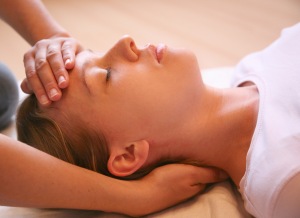
My daughter relaxed to Tony’s touch pretty quickly and pretty soon fell asleep on my chest (snoring) as he was working on her head.  That was a sound that I had not heard too often and definitely not in the past 6 months. That afternoon she napped for an hour and a half.  That evening she only woke one time, without tears, and we were easily able to get her back to sleep in her own bed.  She slept until 7 am that morning.  Within a few days we actually had a full night of sleep with no wake-ups and she woke up happy and rested in her own bed. To top it off she had even taken a 3 hour nap that afternoon!
For anyone that has a child that doesn’t sleep you know how huge this is!  She was more pleasant during the day and began to explain her frustrations instead of just being cranky and throwing horrible tantrums.  It has been 5 nights since her treatment and we have had more sleep than I remember having in a long time!  She is napping well and has a much better demeanor.  She does not fight naps or bedtime and actually likes her bed again.
I am a true believer!  Tony is a healer!  We are so thankful for the treatment!  Anyone that is having sleep issues should definitely see Tony!
IMG_1661Mike, Jill and their (sleeping at night!) daughter Brooklyn
Jill is the FIT4MOM Front Range Membership and Special Programs Coordinator as well as the Littleton Stroller Strides and Body Back instructor and running coach. They are expecting baby #2 in September!

Cranial Therapy

craniosacral-therapy-at-lighten-up-therapies

What if your head wasn’t on right? What if you weren’t right in the head? What if your head wasn’t on straight? Why do we have so many common phrases that describe cranial dysfunction? Because it REALLY does happen!!! I’ll admit that when I was in school the notion that something might not be right with the bones of the skull was openly scoffed at by my instructors. Fortunately I’ve had my eyes opened by clinical practice and my hands have become calibrated to assess the subtle changes in cranial bone alignment and movement…and then fix it!

How does it work? Well, it’s pretty simple if you picture your brain as the most important organ in your body suspended in fluid and filaments that support and lift the brain from every imaginable angle from the skull to the brain. Now imagine if one of those skull bones is twisted or flexed… imagine if it’s not able to adjust to the blood pulsing inside the brain because it’s “stuck”. What symptoms might it cause? Anxiety, sleepiness, sleeplessness, difficulty concentrating, difficulty remembering, headaches, dizziness, jaw pain (TMJ/TMD) are the more obvious ones. It could affect anything that your brain manages:  your hormones, your blood pressure, your coordination.

Please read my testimonials and if you have a toddler with sleep issues please read THIS STORY.   I’ve treated TBI, Concussions, CHI, Headaches, TMD, Sleeplessness, Dizziness, memory issues and I’ve even treated Restless Leg Syndrome! Cranial Therapy is so powerful for some particular pathologies that you will notice a great difference after only one or 2 treatments. Give it a shot, you may be able to quit buying the industrial sized bottle of pain killer or get off all your sleeping medications!!

LTC Tony Bare (ret), DPT, ATC, OCS
Physical Therapist/Owner
Colorado Springs, CO

Knee Pain

13757792-de-rayos-x-anatomia-del-dolor-de-rodilla-masculina

Anyone remotely athletic usually has some degree of knee pain…why? Well, putting aside traumatic injuries, there are a couple of reasons the knee is so susceptible to general non-traumatic or over-use pathologies.

  1. The knee is a the largest moving joint (surface area) in the body and
  2. It is located between the two longest levers in the body (femur and tibia)…the combination creates a great deal of potential torque through the knee-joint and caught in the middle of it is the knee cap (patella).
  3. The knee is really well designed to move forward and backward, but rotation and sideward motions create a real issue for your knee due to the leverage and torque noted above.

Now you are probably thinking…”That makes sense for basketball players who are pivoting and changing direction all the time…but I just walk for exercise…or jog…I’m just moving straight ahead…why do I have knee pain if the knee is designed to move straight ahead?”

The answer is all about biomechanics…my field of expertise. Even though you are moving forward there are subtle sideward and rotational movements that occur in your knee…this puts a lot of stress on the structures designed to control, decelerate and limit those motions (plica, pes anserine, IT band, the patellar tendon and the entire patella femoral joint).

You’ve probably heard the term pronation; well pronation doesn’t stop at your feet. Pronation in the foot is translated into rotation of the tibia and to make matters worse the femur starts rotating the opposite direction during the stance phase of gait. Now picture all those structures I listed above being pulled in both directions and you can understand why your knee hurts when all you do is walk for exercise.

Common Treatment of Knee pain:

Self-treatment: anti-inflammatory medications, ice, rest, knee sleeves, sports creams…these will all help your knee “feel” better…but will not treat the cause of your knee pain… so often times your symptoms will recur. There are a couple of things you can do to address the cause of your knee pain all yourself!! First of all, improve your walking/running surface. The more flat and level the less of those pesky accessory motions affecting your knee. Secondly, better shoes. Some biomechanical issues can be addressed with shoes alone; not a specific brand but a general type of shoe. How can you know what kind of shoe you should wear? You should receive a biomechanical evaluation…and I do that for only $20!!

Physician treatments: stronger anti-inflammatory medications, injections, more expensive braces and hopefully a physical therapy consult.

Physical therapy treatments: Modalities (ultrasound, ice, heat, LASER, electric stimulation), exercises and manual therapy (massage, myofascial release, trigger point needling, etc). You already know the modalities by themselves won’t do much better than what you could do for yourself. Please don’t ask me why every physical therapy student is taught to treat knee pain with exercises…mainly quadriceps strengthening and hamstring stretching…both those muscle groups work largely in the forward plane of movement. The knee ALREADY moves really well in that plane. The bottom line is that the body doesn’t have very many muscles that are even well designed to control lower extremity movement in sideward or rotational plane of motion and believe it or not, you probably don’t need any more strengthening of those muscles…you know why? Because they are really strong already!!! You know why? Because your biomechanics make them work extra ALL THE TIME (every single step). Because they work more than they should…and probably have for years…the muscle itself may be short circuited a bit and have fibrotic knots and ropes running throughout it. If that’s the case…those muscles would benefit from manual therapy (myofascial release) and combined with modalities and exercise you can have your dynamic pronation stabilizing muscles firing on all cylinders before you know it!! Once you combine that with a better walking surface and shoe…you may actually have resolved your knee pain!!

However, often times a shoe is not a great enough correction…or maybe you don’t want to spend the rest of your life confined to walking and running on a treadmill. In either case, please contact me…read my testimonials!! For only $20 I will do a biomechanical assessment on you and let you know if your mechanics can be improved with shoes alone…and what type of shoes you should wear. I’ll also let you know if I feel a custom orthotic would help your mechanics (please read why my orthotics are unique)…and the average cost of the custom orthotics I hand make is typically only another $80!!!

LTC Tony Bare (ret), DPT, ATC, OCS
Physical Therapist/Owner
Colorado Springs, CO

The Impact of Scar Tissue

Scar tissue can affect your health in so many ways. It creates lines of tension that constrict circulation, lymphatics, efficiency of muscle and tendon action. Scar tissue also creates a tether that attempts to change your posture, creating a bending moment one direction or another that muscles on the opposite side of your body perpetually work to counter.

Most scars look benign but each scar is like an Iceberg, what you see is about 8%, while 92% of the scar material delves down into other tissues effecting their performance and creating the challenges listed above. Now multiply this several times over for surgical scar where multiple layers of tissue area lacerated and repaired. Scar management is a huge issue in overall health and especially in physical therapy.

Now consider abdominal surgery, the scar tissue involved is enormous and when it is untreated it begins having effects throughout the abdomen…

images

  1. Vascular: the scar tissue can slow or constrict lymphatic drainage of the abdomen and lower extremities as well as increase venous pressure at all levels below the restriction. Are your feet and legs swelling? Do you have painful varicose veins?
  2. Musculoskeletal: The scar tissue can restrict the passage of nerves and muscles as they move through the abdomen to the lower extremities, this can manifest as hip pain, thigh pain and knee pain.
  3. Musculoskeletal: the pulling of scar tissue can create abnormal pressures on the spine and discs making them more likely to be symptomatic and this can manifest as back pain, hip pain or sciatica.
  4. Genitourinary: The scar tissue can affect your bladder capacity and emptying. It can also affect menstrual cycle and fertility.
  5. Gastrointestinal: One of the most common effects of abdominal scar tissue is any or all of the following: constipation, bowel irritation to specific foods, diarrhea, heartburn and indigestion.

What have you got to lose? Have your scars treated by a skilled myofascial physical therapist…in as few as 2-3 treatments you may be able to consider discontinuing medications you had resigned yourself to having to need for the rest of your life!!

LTC Tony Bare (ret), DPT, ATC, OCS
Physical Therapist/Owner
Colorado Springs, CO

The Fallacy of Arch Supports

orthotic-picture1

Have you been told you need foot surgery? Have you been failed by physical therapy? Orthotics (shoe inserts)? Podiatry (cortisone injections)? Have you been told surgery is your last option?

Please let me share three things I’ve learned as a 15 year military expert on foot mechanics, pain and dysfunction:

  • There is nothing a foot surgery can’t make worse
  • You can’t “unsurgery”
  • Foot surgery is like a potato chip….hard to stop at one

Step 1
Why did conventional physical therapy fail you?
You were treated with modalities (ultrasound, heat, electrical therapy), stretching, strengthening and balancing exercises…you may have received massage or myofascial release. You probably did get some relief but never complete and always temporary….why?
NONE of the above treatments addressed the cause of your pain….just the symptoms. Once your cause is addressed all of these treatments become amazingly effective!

Step 2
Next, you receive a cortisone injection. You may have felt great for hours, days or maybe months but gradually your symptoms returned and you were ready for your next injection and the next and the next. There are consequences to a single cortisone injection let alone multiple injections. Please do your research!

Lastly, this injection also fails to address the cause of your foot pain, the reason why your symptoms return eventually.

Step 3
Orthotics (shoe inserts)
these may be included as a part of physical therapy or podiatry treatments. Why have they failed you?

Failure 1: Your assessment

How detailed was your orthotic evaluation? Were your feet glanced at?
Maybe your health care provider watched you walk back and forth across a clinic floor. Maybe you just stepped in a foam box or had your foot casted.

My evaluation includes detailed assessment of your:

  • Current shoes and any inserts that either came in your shoes or were purchased separately
  • Static standing posture of your leg/ankle/foot. Static prone posture of your leg/ankle/foot
  • Dynamic (treadmill) barefoot multi directional gait analysis

 Failure 2: Your orthotic construction/development
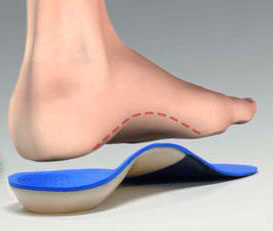
The most common error? You’ve been fitted with an arch support. Your arch was NEVER designed to be a primary weight-bearing structure. An arch support does very little to correct the mechanics of your foot and that’s what has led to your foot pain, leg pain, knee pain or hip pain. To make matters worse the forced correction into your arch can be so uncomfortable that you won’t even wear them. On the rare occasion that your orthotic has a mechanical correction, it’s often based on a faulty or incomplete assessments. See Failure 1 above.
Lastly, your orthotic has been constructed of a rigid unforgiving plastic shell. This shell does not allow your foot to flex, adapt and function normally and can create another series of issues.

Step 4: Surgery
Don’t go here! Please let me see you first. My assessment is free . If I feel I can help you with orthotics, my average cost is only $85. Please read my testimonials on this website and Facebook.

LTC Tony Bare (ret), DPT, ATC, OCS
Physical Therapist
Laramie, WY